quarta-feira, 15 de janeiro de 2014

DICAS PARA FALAR BEM INGLÊS!

1ª Dica – Leia textos (ou mesmo sentenças) em voz alta. Acostume-se a ouvir sua própria voz em inglês. Isso ajuda você a melhorar a pronúncia, a memorizar palavras, expressões, sentenças, etc., e a ouvir você mesmo falando inglês sem achar estranho;

2ª Dica – Quando possível grave-se ao ler um texto. Escolha um texto pequeno e fácil (pode ser um diálogo de um livro, o parágrafo de um texto) e leia-o repetidas vezes em dias diferentes. Grave cada leitura sua e compare as leituras desde o primeiro momento até o último. Leia e grave quantas vezes achar necessário e veja como você vai melhorando a cada leitura;

3ª Dica – Crie diálogos entre duas pessoas e faça o papel de cada um deles. Você deve escrever o texto antes e praticá-lo em voz alta depois. Isso ajuda você a pensar em inglês, a estruturar as sentenças (gramática e vocabulário) e a vencer aquela ansiedade na hora de falar inglês;

4ª Dica – Mantenha sua mente pensando em inglês. Quando estiver em uma fila, sala de espera, restaurante, ônibus, etc., pense em inglês. Descreva a roupa das pessoas, descreva as pessoas, repita mentalmente as placas dos carros (letras e números) é inglês, descreva os caminhos pelos quais você passa em inglês, etc. Enfim, faça de tudo para que seu cérebro se mantenha ativo com a língua inglesa. Isso ajuda você a ampliar o seu vocabulário em inglês;

5ª Dica – Ao aprender uma estrutura gramatical, anote alguns exemplos e reescreva-os para que seu cérebro se acostume com a estrutura. Depois, reescreva o mesmo exemplo, mas trocando algumas palavras. Isso ajuda você a diversificar o modo como a estrutura gramatical é usada e faz com que a estrutura fique melhor fixada no cérebro. Isso é coisa de Abordagem Lexical: aprender a gramática de uso na prática. fonte:inglesnapontadalingua

quarta-feira, 4 de dezembro de 2013

COMPREHENSION TEXTS

Read the passages and choose the correct options according to the readings. 

One of my favorite vacation places is Mexico. I really like the weather there because it never gets cold. The people are very nice too. They never laugh at my bad Spanish. The food is really good. Mexico City is a very interesting place to visit. It has some great museums and lots of fascinating old buildings. The hotels are too expensive to stay but there are more affordable options. For example, you can stay at one of the beach resorts like Acapulco. If you are planning to visit Mexico, you should definitely see the Mayan temples near Merida.

1. 
Sam likes warm weather
Sam doesn't like warm weather at all
Sam hates warm water
Sam likes cold weather
2.
His Spanish is very good
He speaks Spanish very well
He is Spanish
He doesn't speak Spanish very well
3.
There's a lot to see and do in Mexico
There aren't a lof of beautiful places in Mexico
Mexico is a dirty place
Tourists never come to Mexico
4.
Hotels are very cheap in Mexico
The hotels aren't comfortable there
Hotels are all poor in Mexico
The hotels in Mexico are pretty expensive

Last summer, we decided to spend our vacation at the beach because the weather was very hot in the mountains. The travel agent said that traveling by bus was the cheapest way, but we went by plane because it was faster. We wanted to have more time to spend at the beach. The weather was beautiful and we had a great time.
5. We decided to go to the beach because ----.

it was cheaper than going to the mountains
the travel agent said that it was the cheapest
of the hot weather in the mountains
we wanted to spend time at the beach

6. The bus was the ---- way to travel.

best
easiest
cheapest
slowest

7. Traveling by plane was ---- than by bus.

more fun
cheaper
expensive
faster

8. We ---- our vacation.

hated
didn't like
enjoyed
regretted

9. We had very ---- weather during our vacation.

good
hot
warm
cold

terça-feira, 3 de dezembro de 2013

SANTA CLAUS - COMPREHENSION TEXT

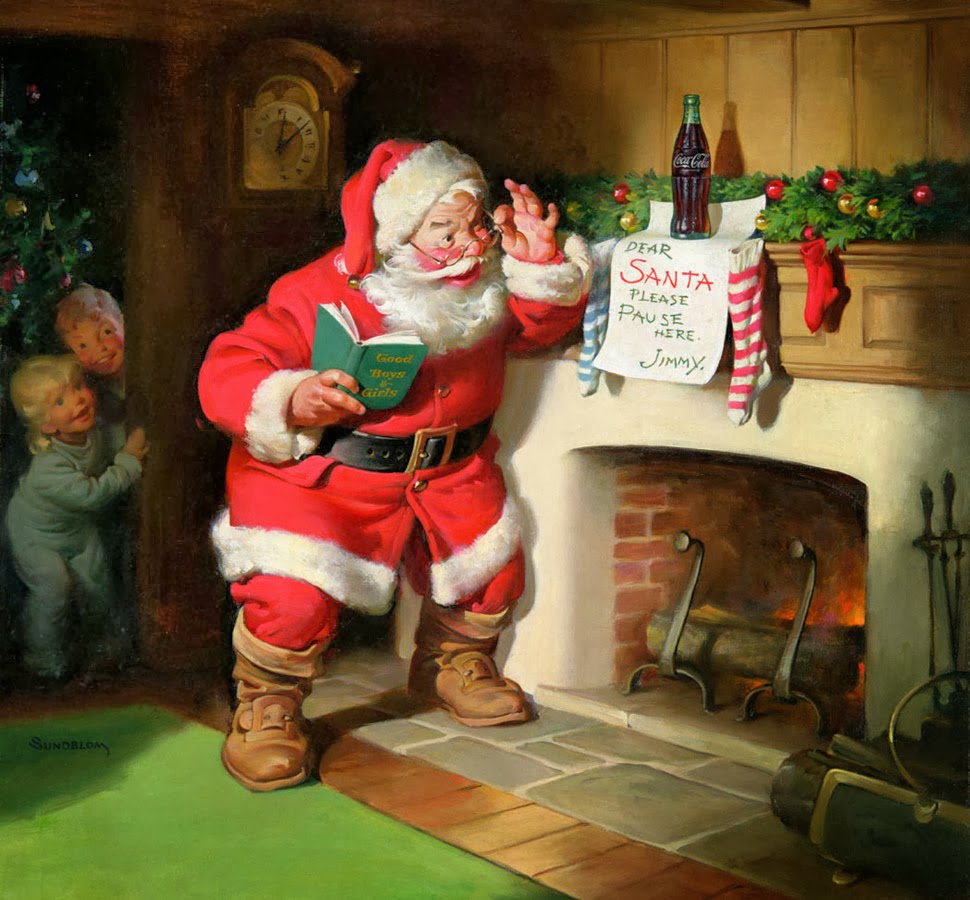
Santa Claus, also known as Saint Nicholas, Father Christmas, Kris Kringle, or simply "Santa", is a figure which was derived from the Dutch figure of Sinterklaas, a historical, legendary and mythological figure who in many Western cultures, is said to bring gifts to the homes of the good children during the late evening and overnight hours of Christmas Eve, December 24 or on his Feast Day, December 6 (Saint Nicholas Day).The legend is based on the tales concerning the historical figure of gift giver Saint Nicholas.

While Saint Nicholas was originally portrayed wearing bishop's robes, today Santa Claus is generally depicted as a plump, jolly, white-bearded man wearing a red coat with white collar and cuffs, white-cuffed red trousers, and black leather belt and boots (images of him rarely have a beard with no mustache). This image became popular in the United States and Canada in the 19th century due to the significant influence of caricaturist and political cartoonist Thomas Nast. This image has been maintained and reinforced through song, radio, television, and films. In the United Kingdom and Europe, he is often depicted in a manner identical to the American Santa Claus, but he is commonly called Father Christmas.
Source: wikipedia/myenlgishpages

Comprehension:

  1. Santa Claus is Saint Nicolas
    a.  True
    b.  False 
  2. Nowadays Santa Claus is depicted wearing bishop's robes
    a.  True.
    b.  False.
  3. Today's image of Santa Claus was conceived in the United States and Canada.
    a.  True
    b.  False 
Related Posts with Thumbnails